The Blueprint Before the Code: Architecting Success with Requirement Engineering

Estimated reading time: 8 Minuten
In an era where AI is only as powerful as the data that fuels it, many organizations are paralyzed by ‚data swamps‘—vast repositories of unverified and unusable information. Stakeholders understand the value of data integrity and are eager to see actionable KPIs that drive strategic decision-making and reflect true organizational health. Faced with these challenges, the reflexive instinct is often to default to technological quick-fixes:
- Implementing niche tools,
- Layering on more complex dashboards, or
- Attempting to brute-force AI solutions onto fractured foundations.
Although the data engineering team can build new efficient pipelines or redesign the reporting structures, even after many sprints of working and revising, stakeholders often still do not get what they want. This happens because while a data engineer knows how to utilize the technology, they might not know if the technical output aligns with the actual business objective.
Faced with vague, one-liner Jira tickets, the role of a business analyst and the discipline of proper requirement engineering become vital.
Throughout this post, we will examine the significant value that requirement engineering brings to technical teams, provide a clear definition of the process, and explore how these methods empower organizations to construct a reliable roadmap.
Defining the Universal Translator: What is Requirement Engineering?
As per definition, requirement engineering is the systematic process of identifying, documenting, and managing requirements. However, while accurate, this definition misses the „soul“ of the discipline.
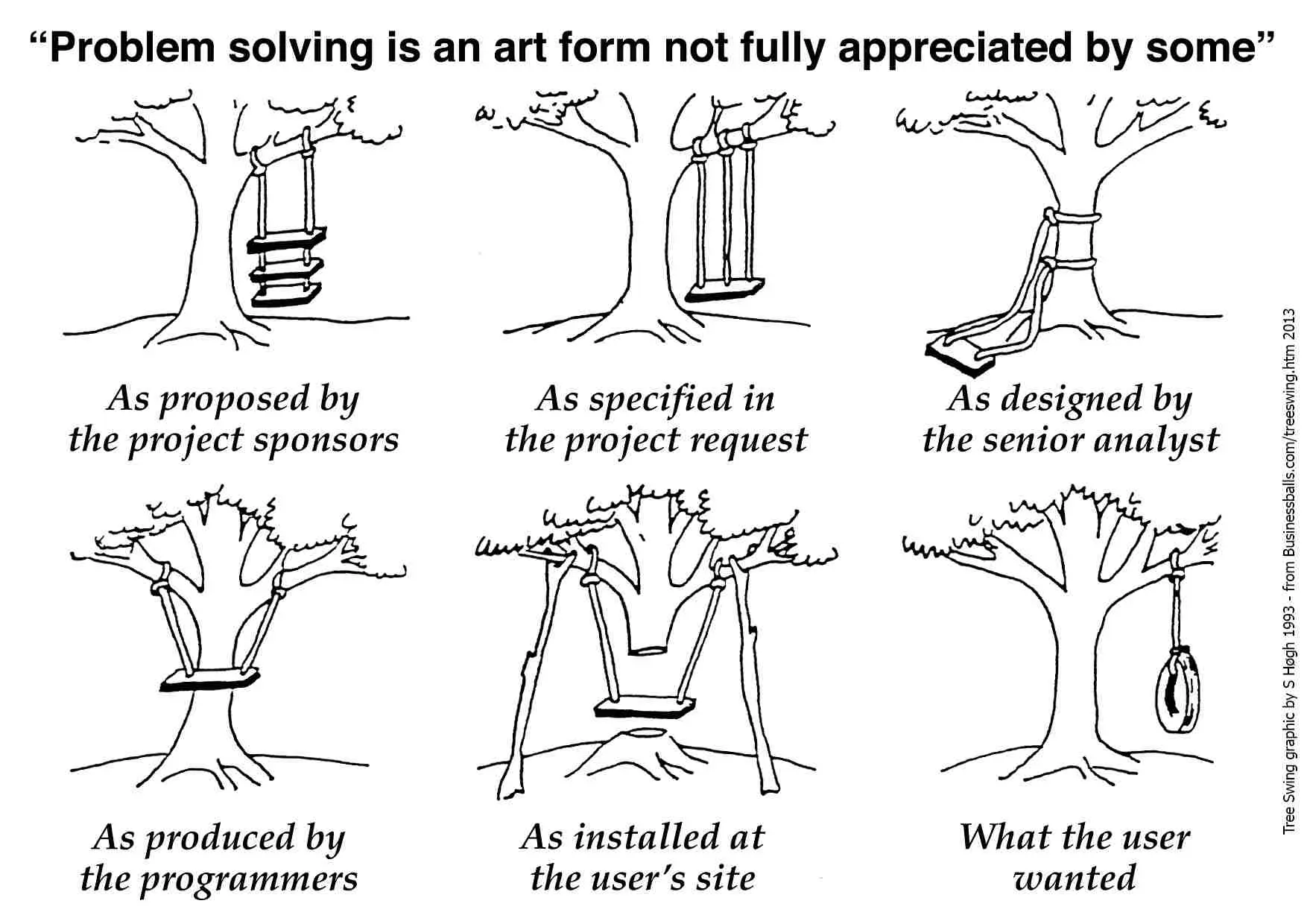
In practice, requirement engineering is the universal translator of the data world. It is the art of building a shared mental model between people who speak „business value“ and people who speak „Python and SQL.“ Without it, you are not just building software; you are participating in a high-stakes game of „telephone“ where the final product rarely resembles the original request.
Think of requirement engineering as a foundational blueprint. It is an iterative, incremental process that bridges the gap between a stakeholder’s vision and a developer’s code. It ensures that the „why“ is never lost in the „how.“
The Real Cost of Skipping the Blueprint
Recent research shows that more than one-third of IT projects are eventually cancelled or never used.(1) This can be linked to multiple factors such as poor or slowly changing definitions of the primary problem or the lack of communication between stakeholders and the development team.
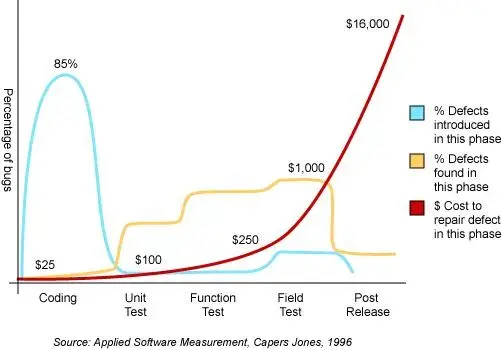
Proper requirement engineering minimizes the risk of project failure by systematically identifying needs and resolving conflicts in the early phases. It acts as a strategic investment: identifying and fixing a requirement error during the initial phase is significantly cheaper than fixing it once the code is in production.
More importantly, requirement engineering creates a „common language.“ It prevents the „illusion of understanding“ where developers and customers believe they agree, only to realize months later they had completely different mental models of the system. This documented foundation is a prerequisite for all downstream activities, from system architecture to testing and validation.
The Pyramid of Requirements: From Vision to Validation
Identifying requirements is rarely a simple task; they are often obscured by conflicting stakeholder viewpoints or unspoken assumptions. To navigate this, we use a pyramid model—a framework that ensures we do not start building the „how“ until we fully understand the „why.“
To see it in action, let us follow a single requirement through all four levels:
Level 1: The Strategic Goal (The North Star)
The big question: What business outcome are we trying to achieve? At the peak, we define the functional goals and success measures that reflect the status quo and justify the need for a change. We look past „we need a report“ and find the „north star.“
- Running example: „The finance team needs to reduce manual month-end data reconciliation time by 50%.“
- The action: Our objective is to transform vague business desires into measurable success criteria backed by objective data. Here, we derive KPIs from established standards like ISO/IEC 25010 (performance, security, reliability, usability, or maintainability)
Level 2: The Daily Reality (The Context)
The big question: How does this look in a user’s daily life? At this level, we move from the high-level goal to the person using the system, using user stories to capture the specific friction points.
- Running example: „As a financial controller, I need an automated flag for any transaction over $10,000 that lacks a verified vendor ID, so I do not have to search for them manually.“
- The action: By describing needs from the user’s perspective, we reveal the tangible pain points that occur within daily workflows.
Level 3: Derived Requirements (The Translation Layer)
The big question: What technical prerequisites must be met to make the story true? Often, a simple request hides complex technical dependencies. Here, we translate the „user story“ into specific system requirements.
- Running example: “To flag transactions, the system must join the ’sales‘ table with the ‚master vendor‘ table in real-time. This requires a new data validation check in the ETL pipeline.”
- The action: We allocate these needs to specific sub-systems and identify which existing processes or system restrictions are affected.
Level 4: The Technical Blueprint (The Foundation)
The big question: What do the engineers need to know to build it? Finally, we create the detailed technical specifications. This is the „engine room“ where we define the tools and logic.
- Running example: “Use a Python script for validation, ingest data from Snowflake, and trigger an alert via Slack for high-value anomalies.”
- The action: This provides a roadmap detailed enough for the development team to implement without further guesswork.
The Four Pillars of the Requirement Engineering Journey
Requirement Engineering is not a linear path but is carried out through four iterative pillars: elicitation, documentation, validation & review, and management. If the pyramid is our map, the four pillars are our compass. While they sound like stages, they often overlap and repeat to ensure the project stays on track as it evolves.
Pillar 1: Requirement Engineering Elicitation – Finding „Hidden“ Needs
First, we have to figure out what everyone actually wants. This stage is about gathering needs and limits from everyone involved. We want a clear picture of the problem and the system we are building. However, it is not just all about the tech—it is also about the people! Understanding how everyone is affected by changes helps us to plan out our time and resources properly.
A persistent challenge in elicitation is that people forget to mention the „obvious“ system- or organization-related informations. . This is why a proper communication plays an essential role in this phase. To solve this problem, we conduct interviews, host workshops, or even shadow people at their daily work.
- The goal: Find the „why“ behind the problem and set quantitative markers to measure success.
Pillar 2: Documentation & Specification – Writing the „Master Plan“
While gathering information is important, it does not help us very much unless all requirements are systematically and accurately documented. You may know projects that last for years and yet cannot be accepted as „done.“ To avoid the project dragging on due to „one more thing“ requests, we create a Software Requirements Specification (SRS). This document provides a detailed description of the primary objectives, functional features, and system integrations, serving as a definitive reference for all project participants and ensuring organizational alignment.
- The goal: Create a definitive „contract“ describing the goals and features so that all participants are aligned.
Pillar 3: Validation & Review – The „Reality Check“
Before the heavy lifting begins, the SRS should be reviews, validated and signed-off by the management. In this phase, we confirm that the suggested solutions actually solve the intended problem and that the end result of the project aligns with the team’s needs. Here, we often provide a Minimal Viable Product (MVP) or a pilot version.
Walking through the project steps with this version helps users to visualize and interact with the product before it is deployed into production. This early feedback often leads to fewer changes later in development, though it is important to ensure these changes stay within the original scope of the project.
- The goal: Let users „test drive“ a version of the product to catch expensive errors early.
Pillar 4: Requirement Engineering Management – Keeping the Story Straight
Requirement engineering accompanies the entire lifecycle of a project. This pillar acts as the „history book“ of the project, tracking the „life story“ of each requirement. It involves structuring requirements for different roles (e.g., developers, testers, auditors) and managing the „results“ of the RE process, such as specification documents and models.
A formalized management serves as a critical mechanism for mitigating „scope creep,“ which refers to the unregulated expansion of project features beyond the original mission. By instituting a change control committee consisting of key stakeholders to evaluate and subsequently approve or reject modifications, organizations can more effectively adhere to established budgetary and temporal constraints.
- The goal: Ensure traceability. When someone asks, „why are we building this?“, we have a documented answer ready.
Conclusion: The Bridge to Data Success
In summary, requirement engineering is the essential bridge between business strategy and technical implementation. By moving away from vague, one-liner Jira tickets and embracing a systematic approach, we ensure that every hour of engineering effort translates into tangible business value.
When we invest in the „why“ before the „how,“ we stop building „data swamps“ and start building strategic assets. Whether it is ensuring complex compliance or aligning a report with a CFO’s definition of profit, requirement engineering is the discipline that ensures we are building the right thing the first time.
Is your data project missing its blueprint?
- Are your Jira tickets empty or vague?
- Do you lack a clear „life story“ or traceability for your KPIs?
- Is your team struggling with „scope creep“ and shifting goals?
If these challenges sound familiar, your project could benefit from professional requirement engineering. 😉